

Lectura: 2 min
In July 2026, a study with Marina Palamós as its main setting was published in the scientific journal Frontiers in Marine Science. The work was led by the Center for Advanced Studies of Blanes (CEAB-CSIC) in collaboration with Ocean Ecostructures, and raises a fundamental question: can Mediterranean sponges survive and help regenerate the marine ecosystem of a recreational harbor?
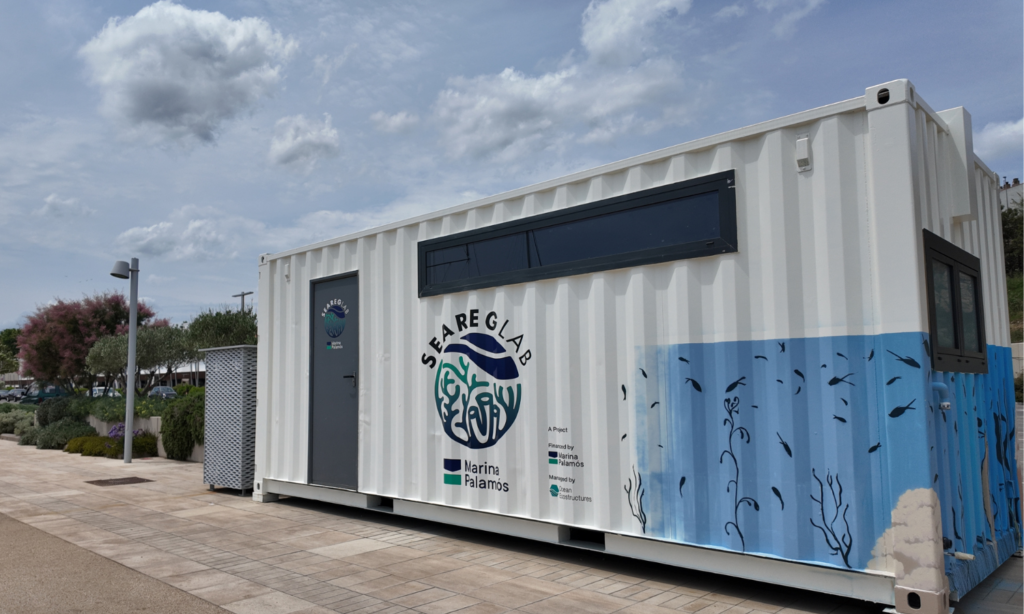
How the study was carried out
The researchers installed special structures on the marina’s jetties designed to support marine life, known as Life Boosting Units (LBU). On these structures, they transplanted five Mediterranean sponge species collected from the Blanes area, and monitored them for 455 days using underwater photography and artificial intelligence tools.
What they found
Of the five species studied, only one demonstrated the ability to adapt and thrive in the polluted environment of a recreational harbor: Chondrosia reniformis. With a 91.7% survival rate, this sponge not only survived — it reproduced asexually, generating new clonal individuals, moved across substrates in search of more favorable conditions, and showed a remarkable capacity to recover from infections.
The other four species studied failed to adapt to harbor conditions and died within the first few months.
Why it matters
This study is significant because it shows that recreational harbors, often considered too degraded to support quality marine life, can become active spaces for ecological regeneration when the right species and tools are used.
At Marina Palamós, our commitment to marine biodiversity is not new. The biomimetic structures installed on our jetties, the periodic biodiversity inspections with OceanEcoStructures, and the POSINODE water quality monitoring system are all concrete examples. The fact that our facility was chosen as the setting for a scientific study of this level is, for us, a recognition of the path we are taking.
Congratulations to the research team on the publication. The sea is grateful.
Article here: https://www.ceab.csic.es/es/una-esponja-mediterrania-aliada-per-recuperar-la-vida-als-ports-contaminats/