

Reading time: 3 min
As November arrives, most boats on the Costa Brava go out less often or stay laid up until spring. Proper boat winterisation on the Costa Brava is what separates getting back on the water in April without a hitch from starting the season in the workshop. In the Mediterranean, the cold is rarely the problem: humidity, salt and months of inactivity are.
Boat winterisation on the Costa Brava: afloat or ashore
The first decision is where the boat will spend the winter. Afloat, it stays ready for the good days, and on the Costa Brava there are plenty, but mooring lines and fenders need checking before the easterly storms. Ashore, the hull rests, the underwater sections stay free of fouling and maintenance drops. For boats up to 8 metres, the dry marina at Marina Palamós has 141 spaces and combines both options: the boat is stored on land and launched whenever you want to go out.
The engine comes first
- Fuel stabiliser: prevents deposits and blockages that make spring starts difficult. Once it is added, running the engine for a few minutes is enough for it to circulate.
- Oil and filters: changed before the lay-up, so the engine spends the winter with clean oil.
- Cooling system: flushed with fresh water to remove the salt. It is also a good moment to check belts, clamps and hoses.
- Outboards: fogging oil in the cylinders prevents internal corrosion during the months without use.
Batteries and electronics
Batteries are stored fully charged, disconnected, with clean terminals protected by dielectric grease. A maintenance charger or a monthly voltage check extends their life. Portable equipment, such as a handheld VHF radio or GPS, is better kept at home, away from the damp. The bilge pump contacts deserve a separate check: it is the pump that works when water gets in.
Humidity and ventilation
Mattresses, cushions and bedding come off the boat, along with everything in the galley. Moisture absorbers and light ventilation of the cabin and lockers prevent mould and musty smells. Heads and sinks are flushed with fresh water and the water tanks are emptied: water left standing for months ends up causing problems.
Hull, deck and sails
A wash with marine soap is the moment to inspect the gelcoat for blisters or cracks before waxing the topsides. Anodes and seacocks are checked, cleaned and lubricated. Sails are washed with fresh water and a mild detergent, dried completely and stored somewhere dry once the seams have been checked. A breathable, well-tensioned cover protects the deck without collecting water.
A winter that shows in spring
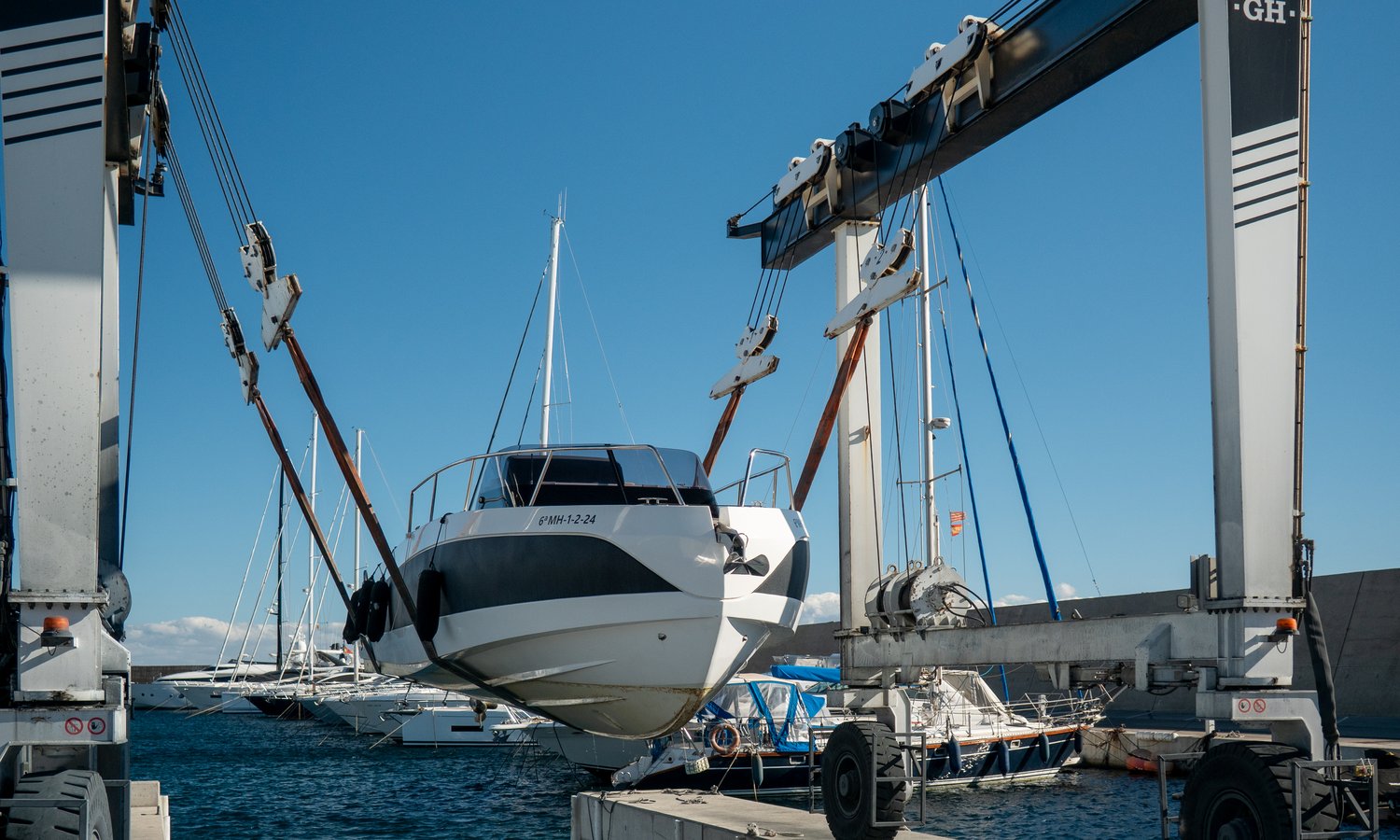
The boatyard at Marina Palamós, with a 4,000 m² technical area and a 45-tonne travel lift, is designed for this work, whether the owner does it or hands it to accredited professionals. What gets done in November pays off in April: the season starts on the first day you feel like heading out to sea.


